 (High-Res) |
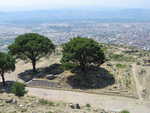
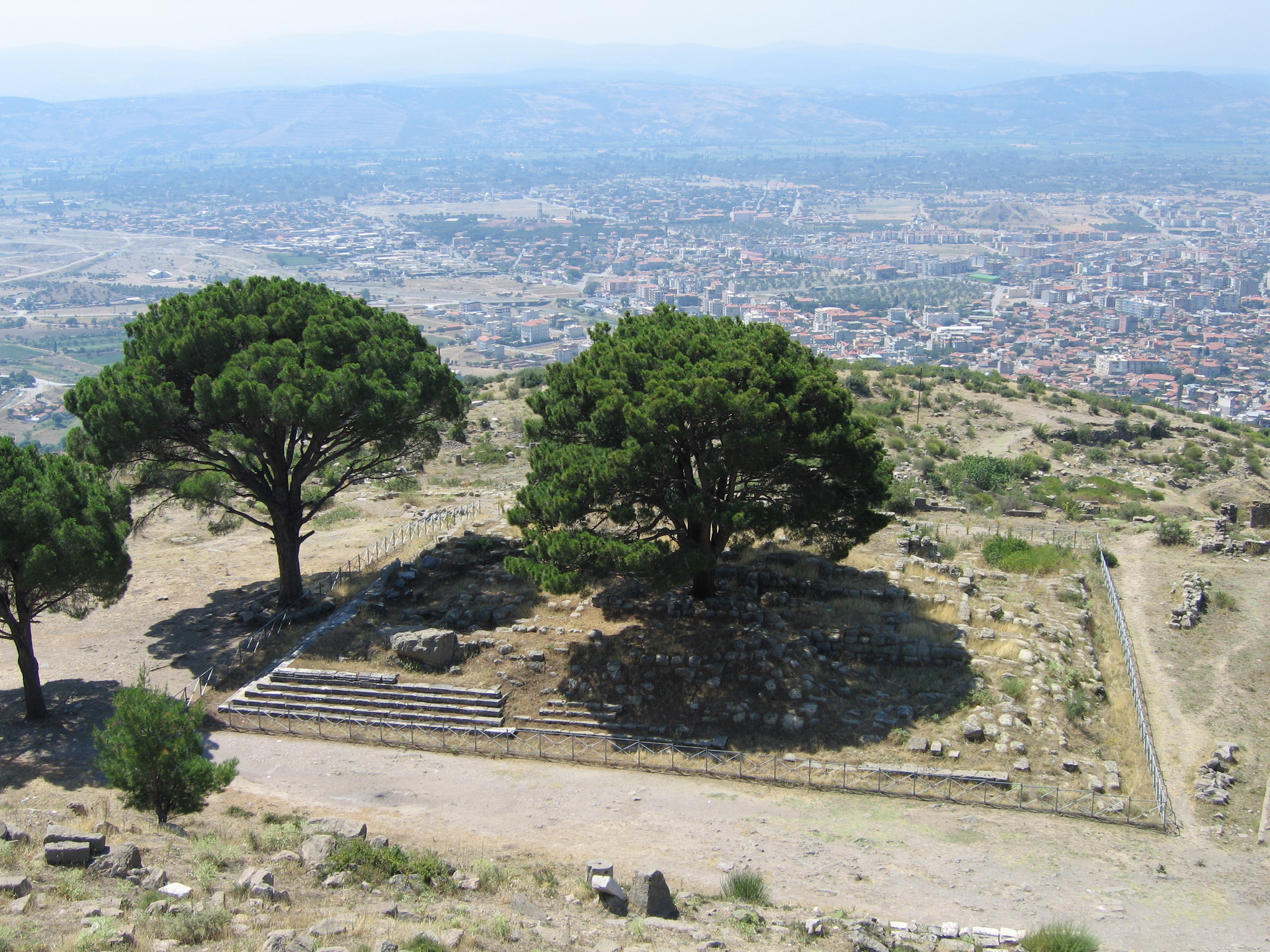
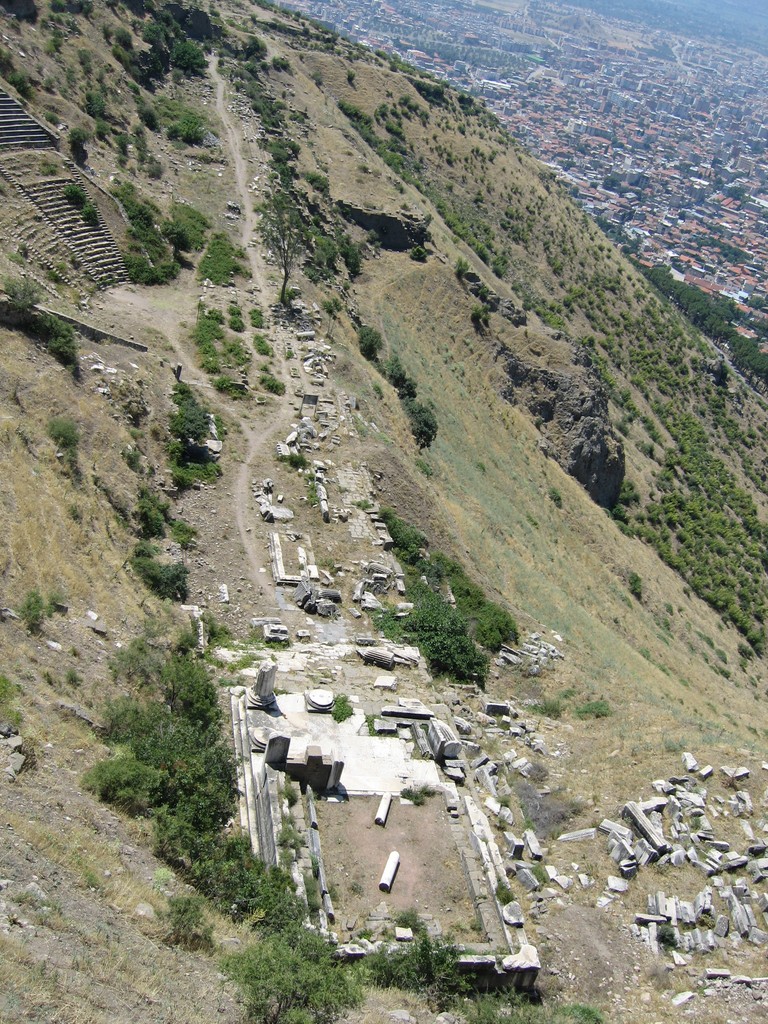
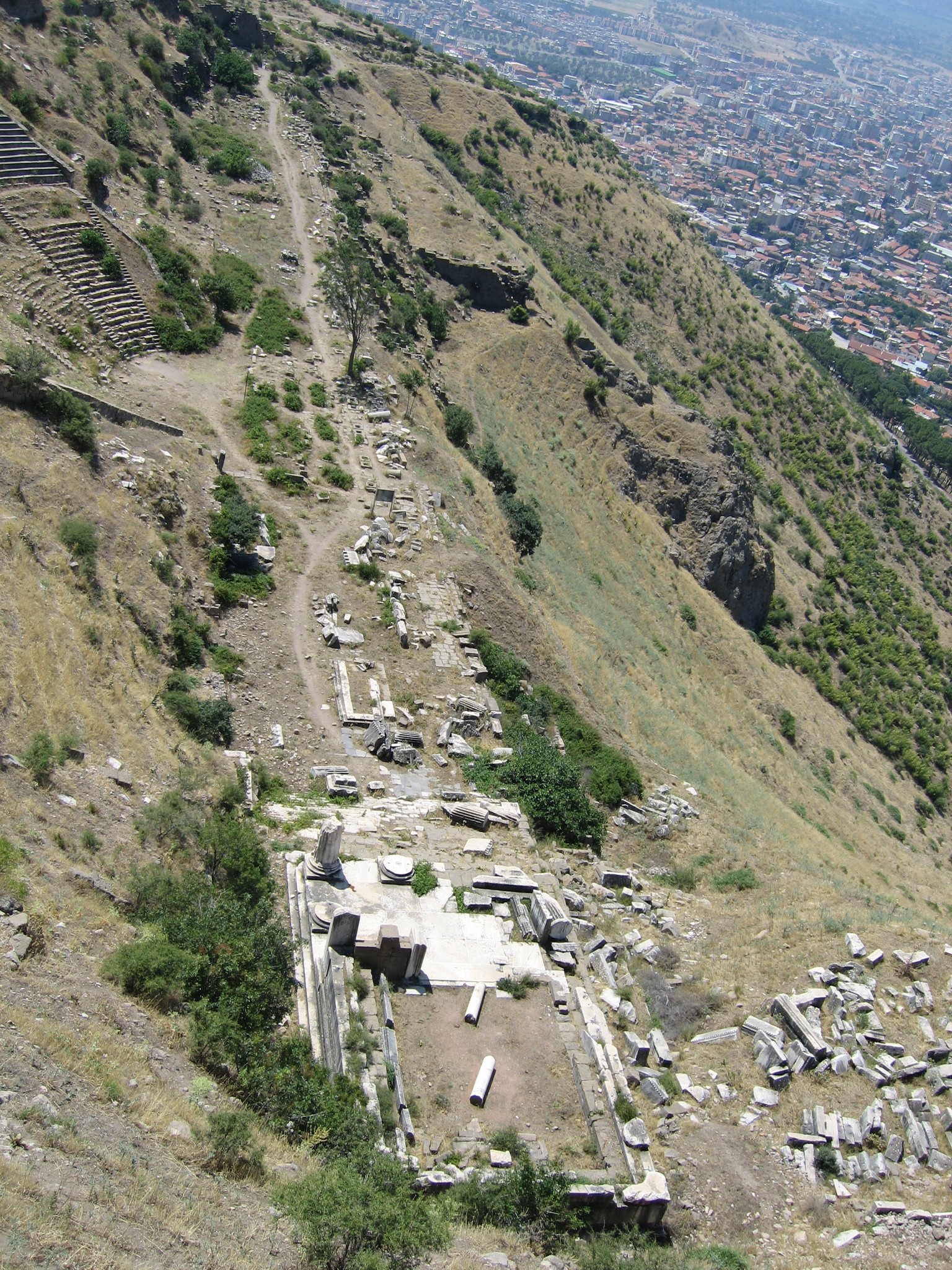
This was the site of the Great Altar of Pergamon, one of the most impressive monuments of the ancient world.
It is now in the Pergamon Museum in Berlin, taken in its entirety by German archaeologists in 1878. Having seen the restored
altar in Berlin several years ago, I can only imagine how magnificent it must have been in its original location.
|
 (High-Res) |
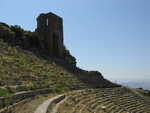
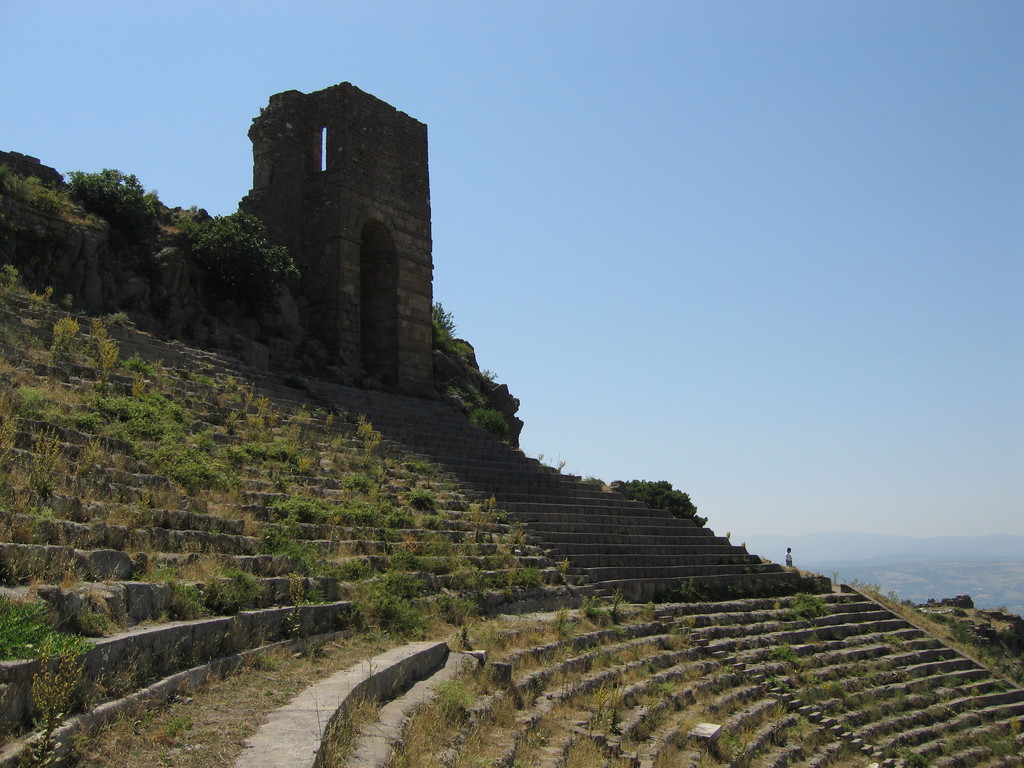
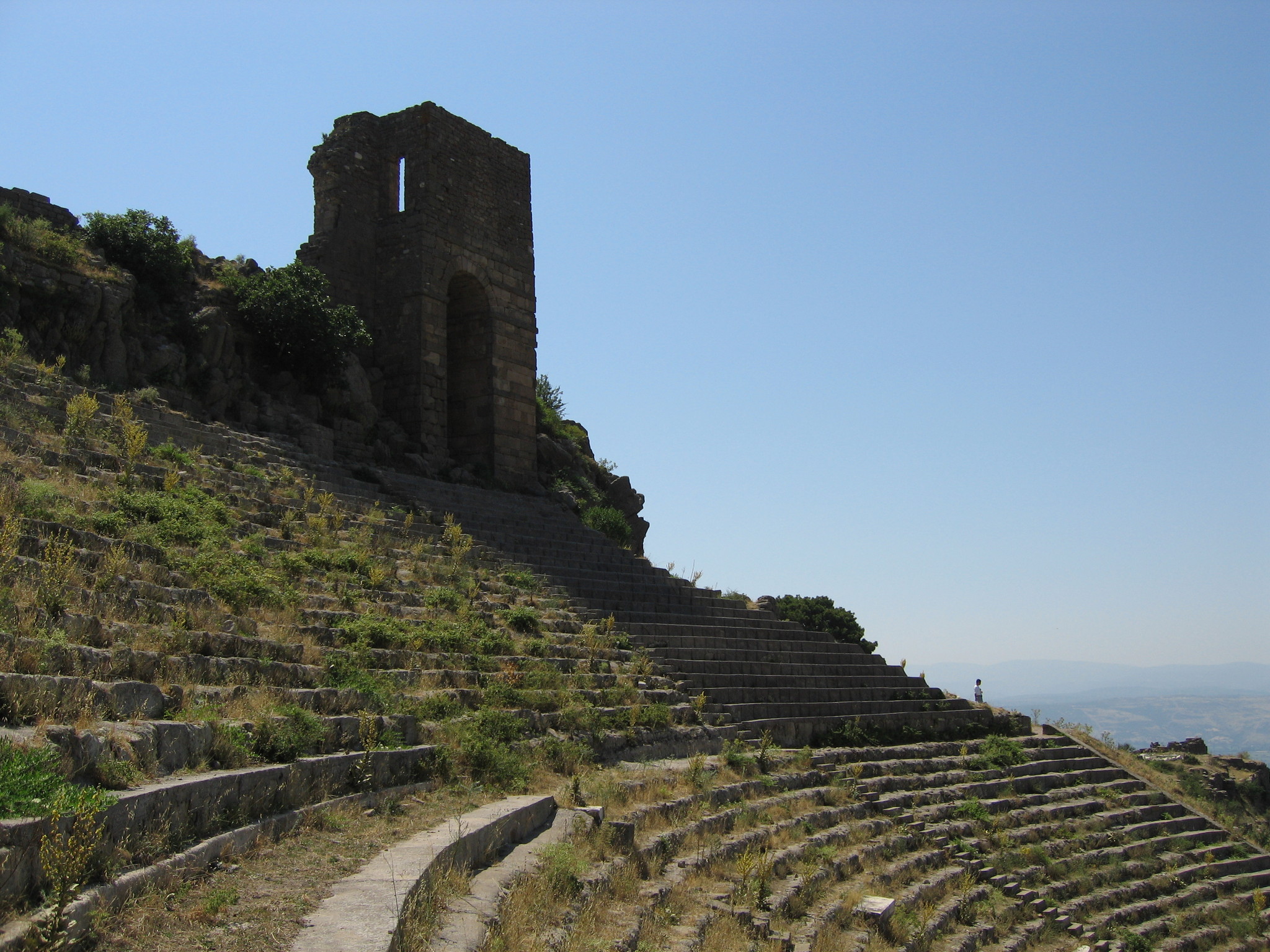
The theater at Pergamon, which seats 10,000, is one of the steepest of the ancient world.
Above the theater stand the remains of a Byzantine tower.
|
 (High-Res) |
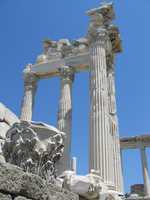
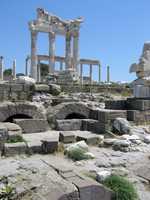
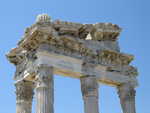
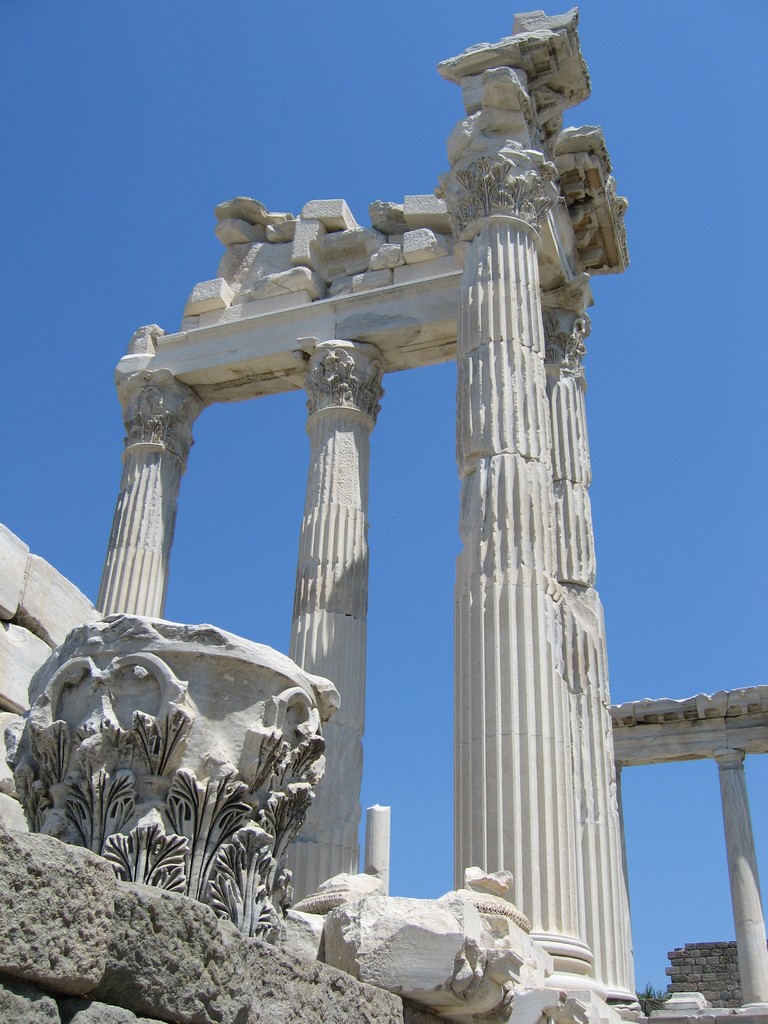
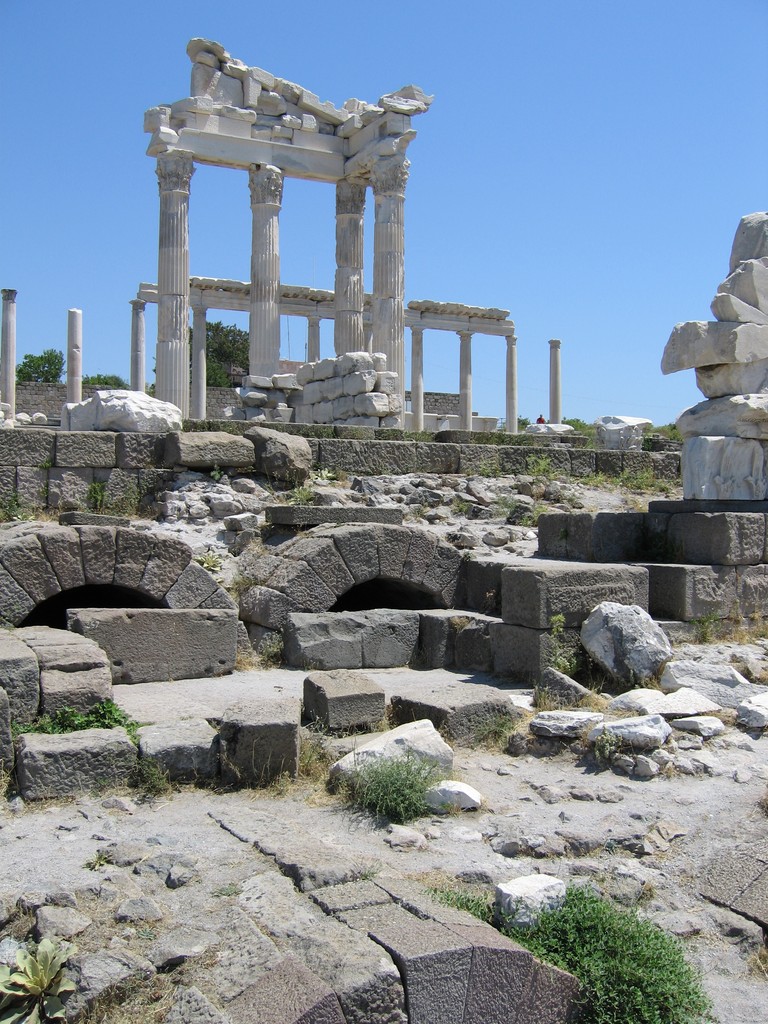
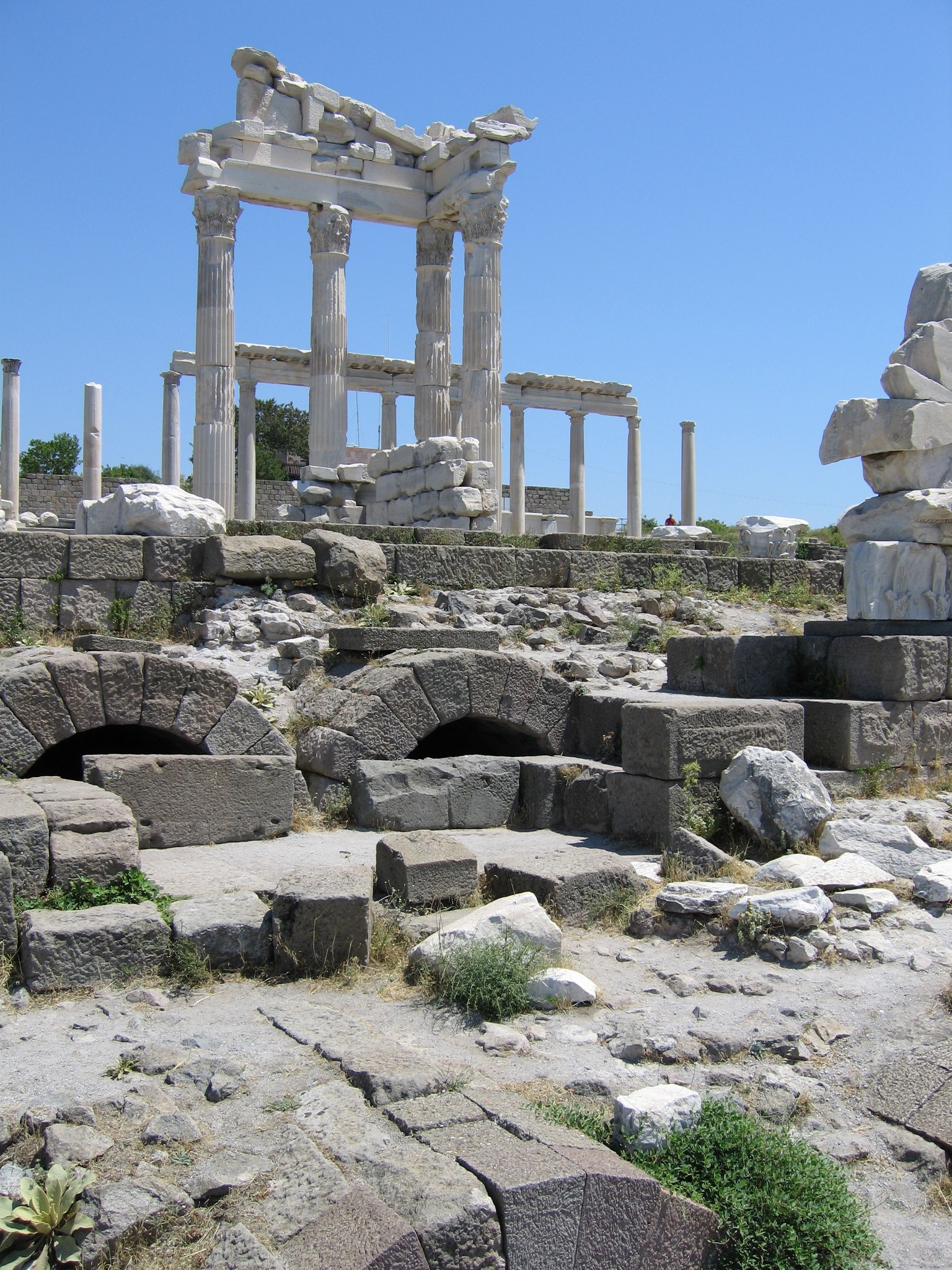
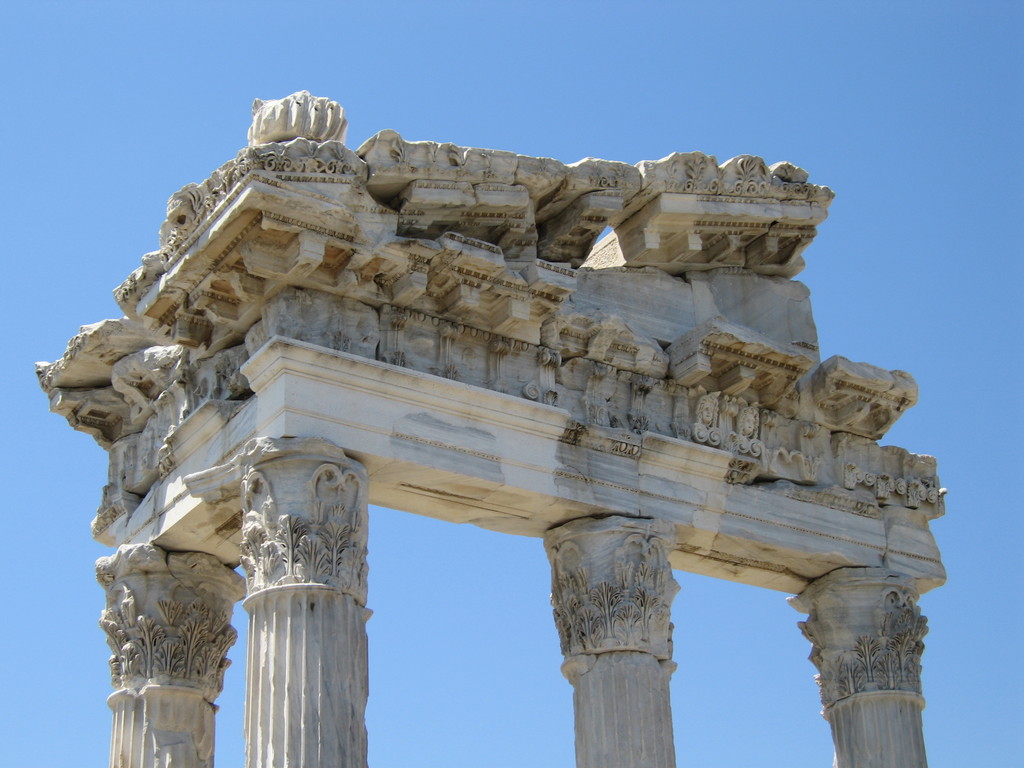
Although the Emperor Trajan did not visit Pergamon, a temple dedicated to him was built
on the Pergamene acropolis. Fragments of colossal statues of Trajan and Hadrian were discovered here and shipped to Berlin.
|
 (High-Res) |
Another view of the temple of Trajan. Underneath, one can clearly see entrances into the large vaulted chambers in the substructure.
|
 (High-Res) |
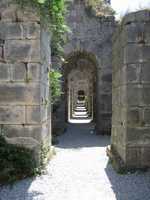
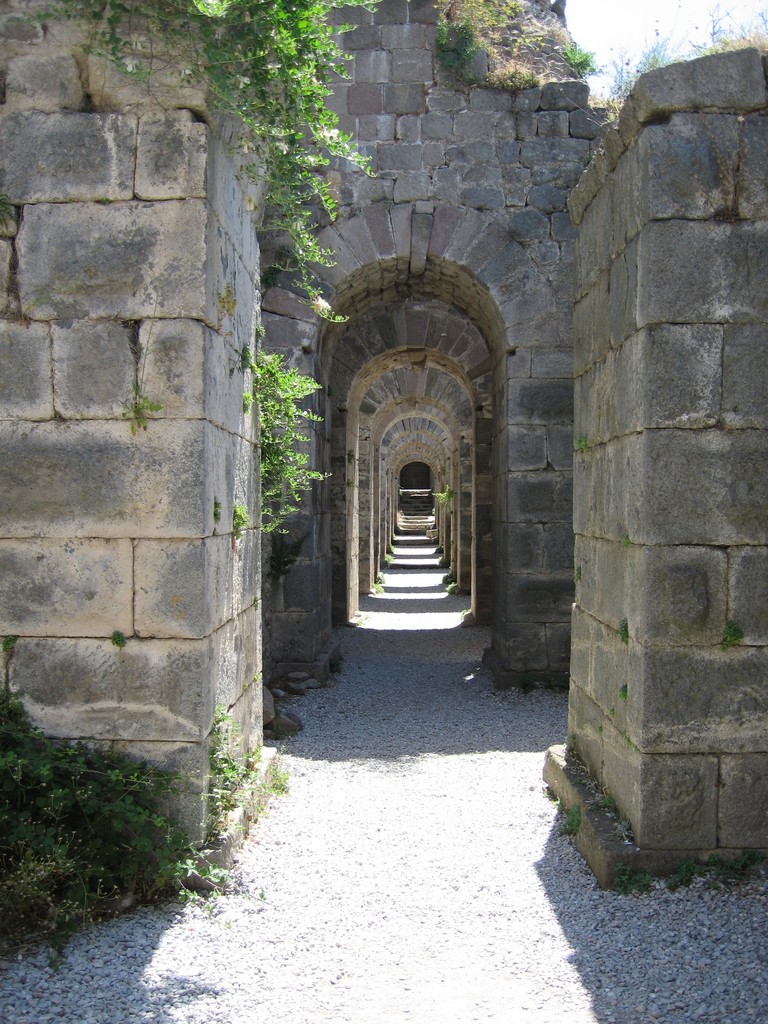
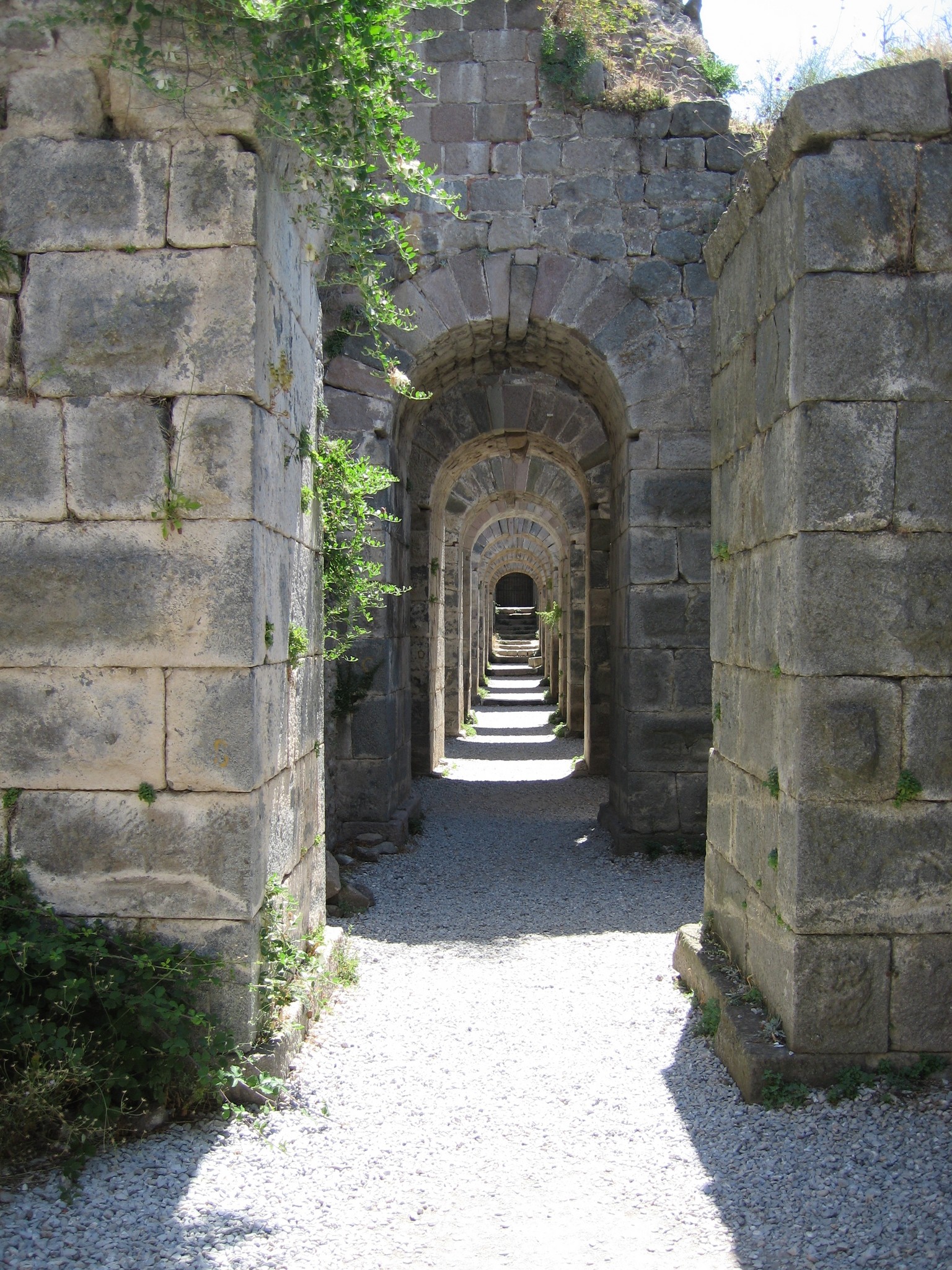
This series of arches is from the substructures beneath the temple of Trajan.
|
 (High-Res) |
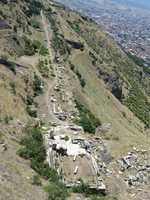
A short walk from the theater is the temple of Dionysus. Probably built during the reign of Eumenes II (197 - 157 BCE),
extensive restoration took place under the Roman Emperor Caracalla (198 - 217 CE).
|
 (High-Res) |
Another view of the temple of Trajan.
|
 (High-Res) |
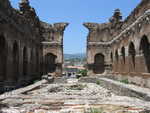
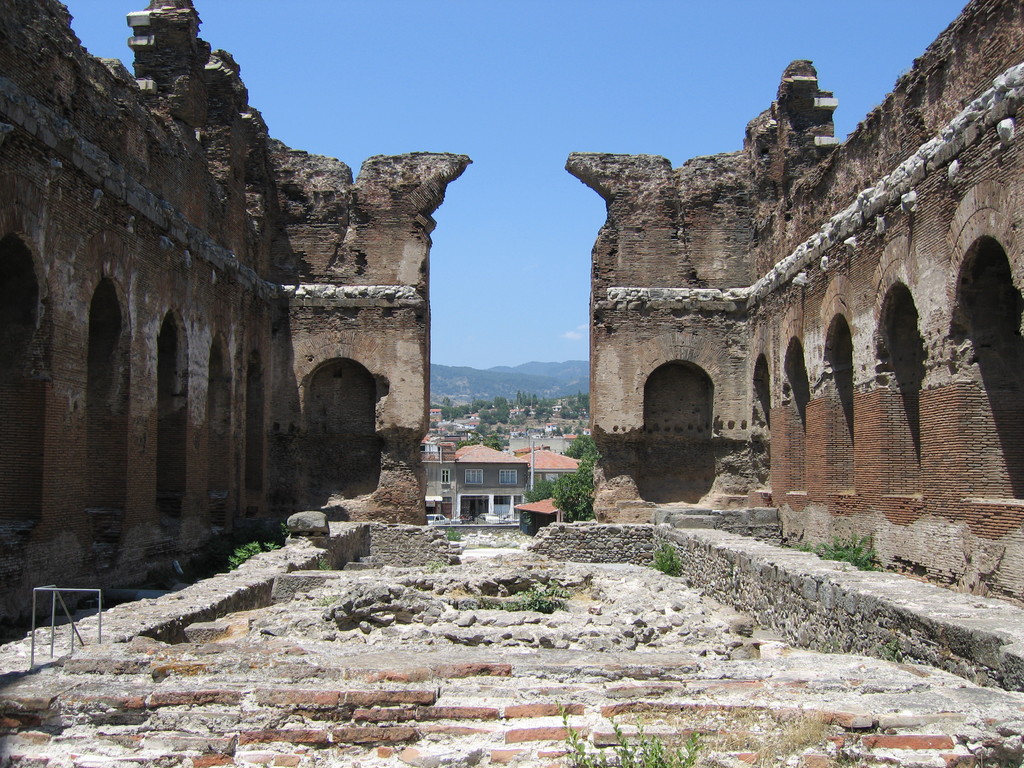
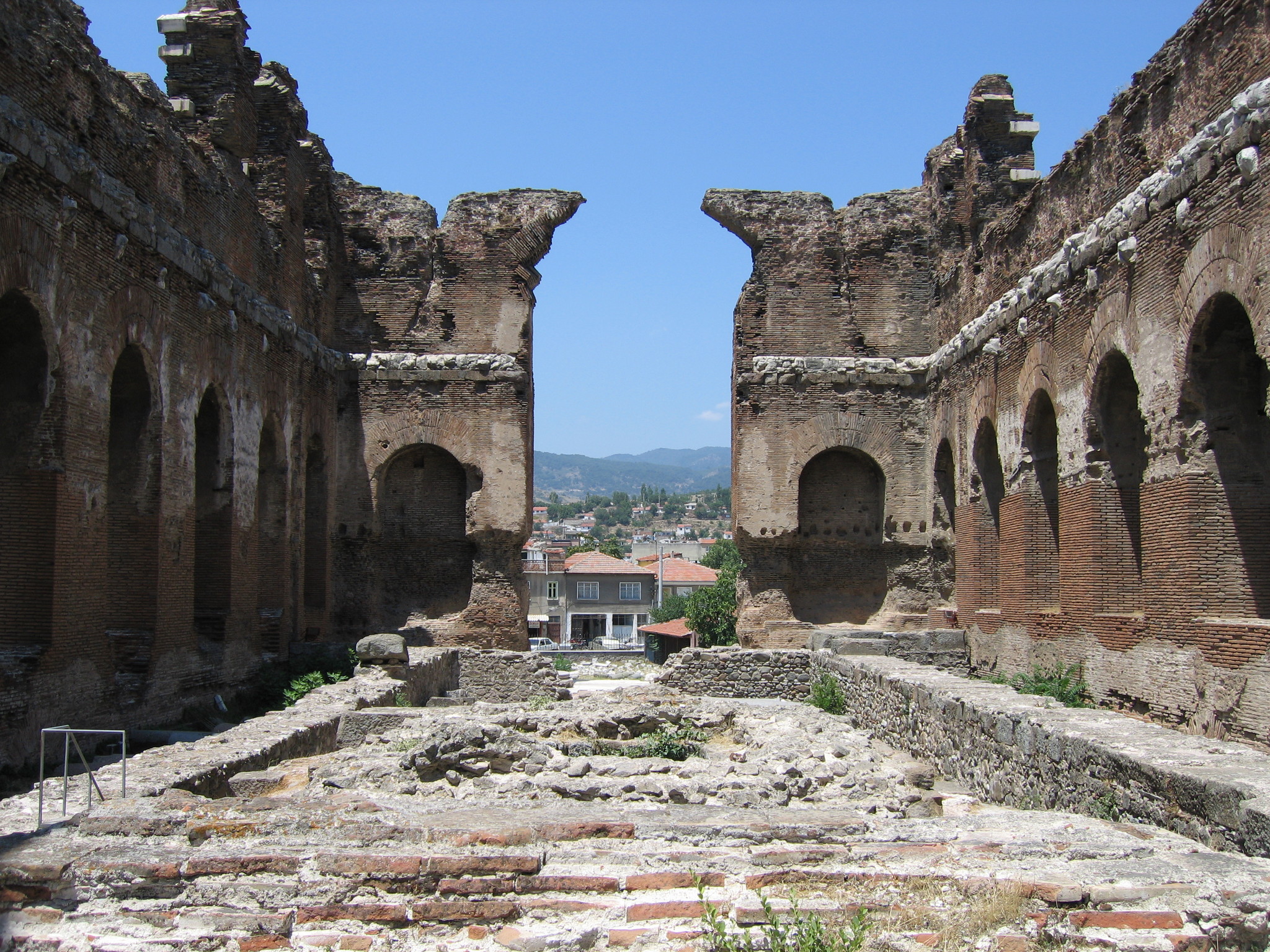
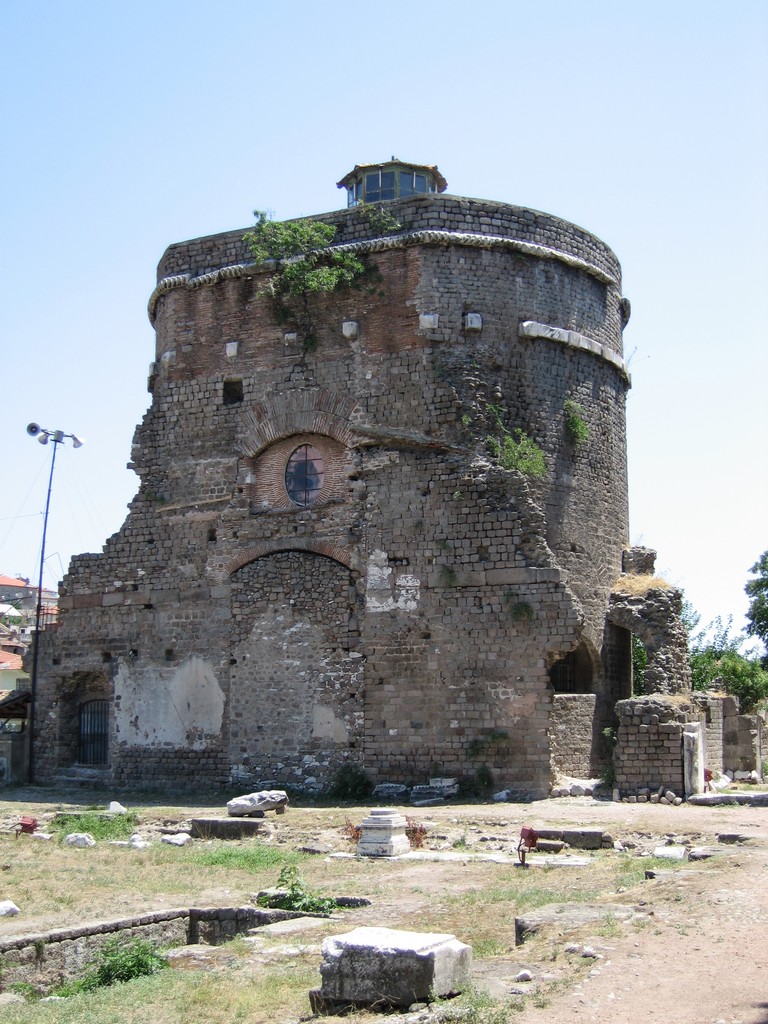
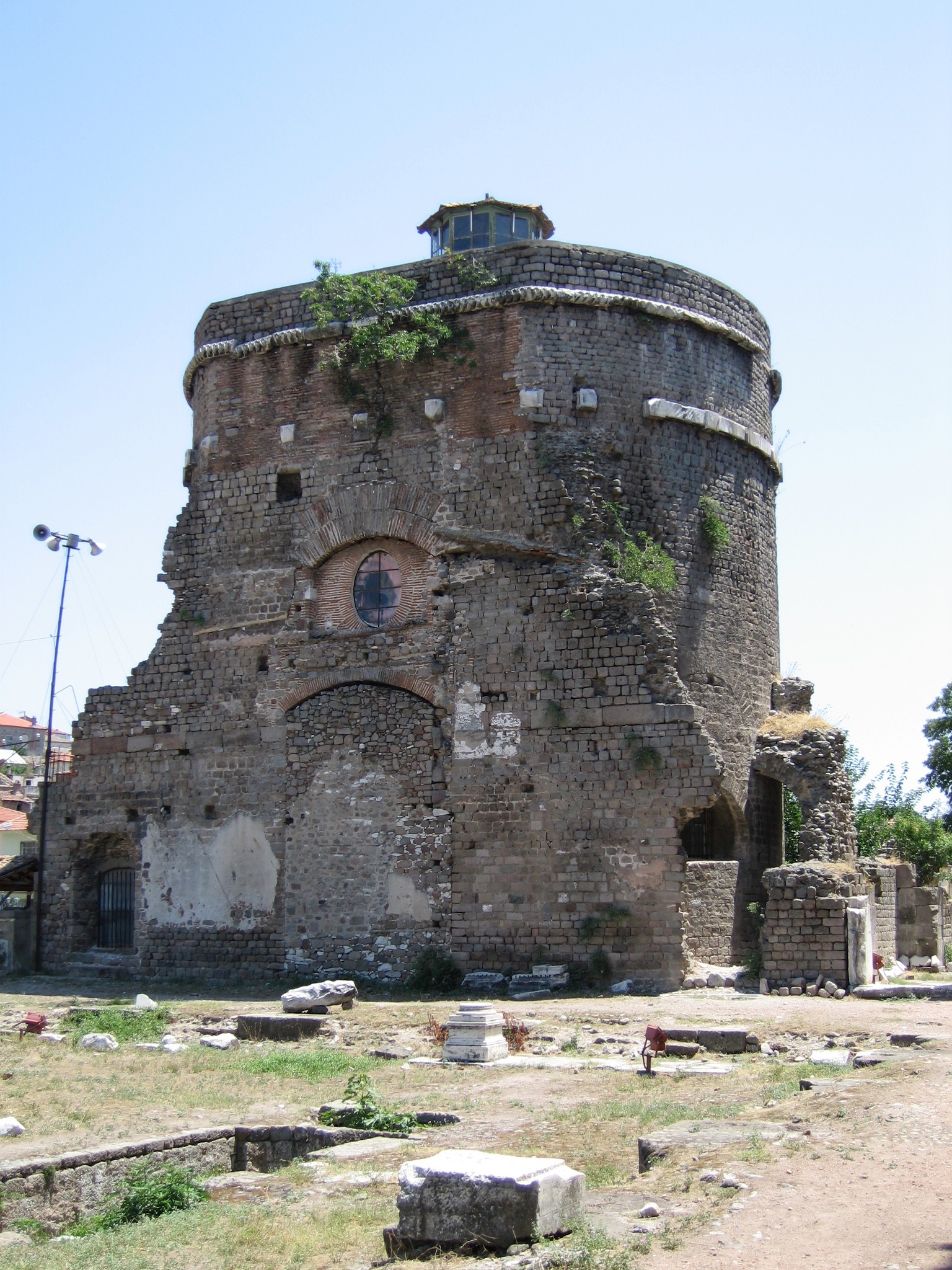
The Red Basilica was erected during the reign of Hadrian (117-138). Originally dedicated to the Egyptian
god Serapis, it was converted into a church during the Byzantine era. The River Selinus runs underneath the floor
of the temple in two parallel canals, and the waters were apparently abundantly used during the Egyptian rites.
The elaborate substructures, now partially in ruins, can be visited by any tourist with a flashlight.
|
 (High-Res) |
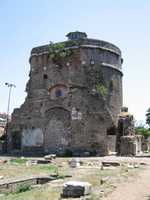
A portion of the Red Basilica was converted into a mosque. Interestingly, this mosque does not have a minaret.
|
 (High-Res) |
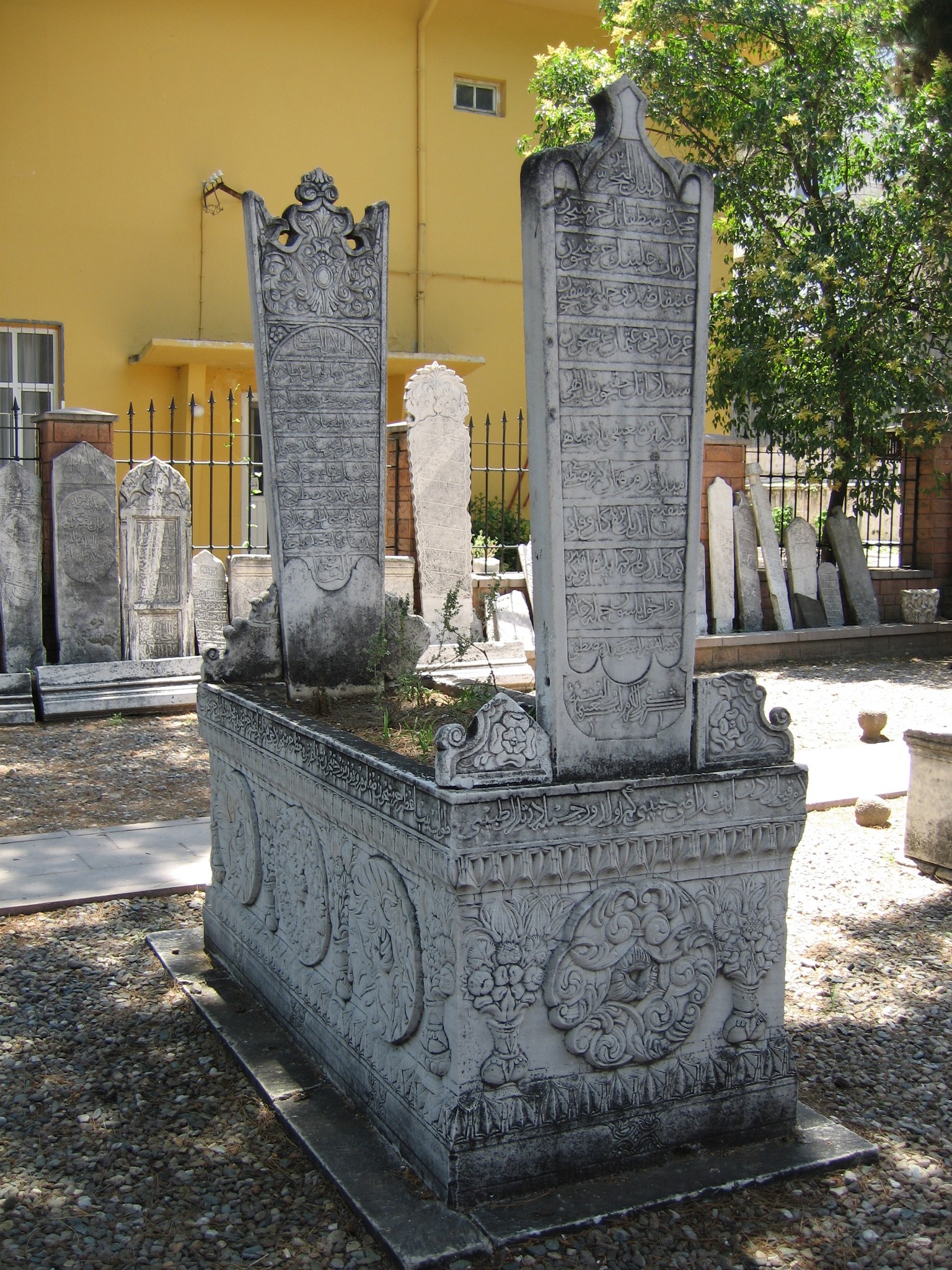
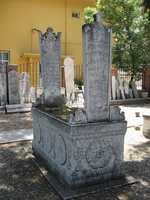
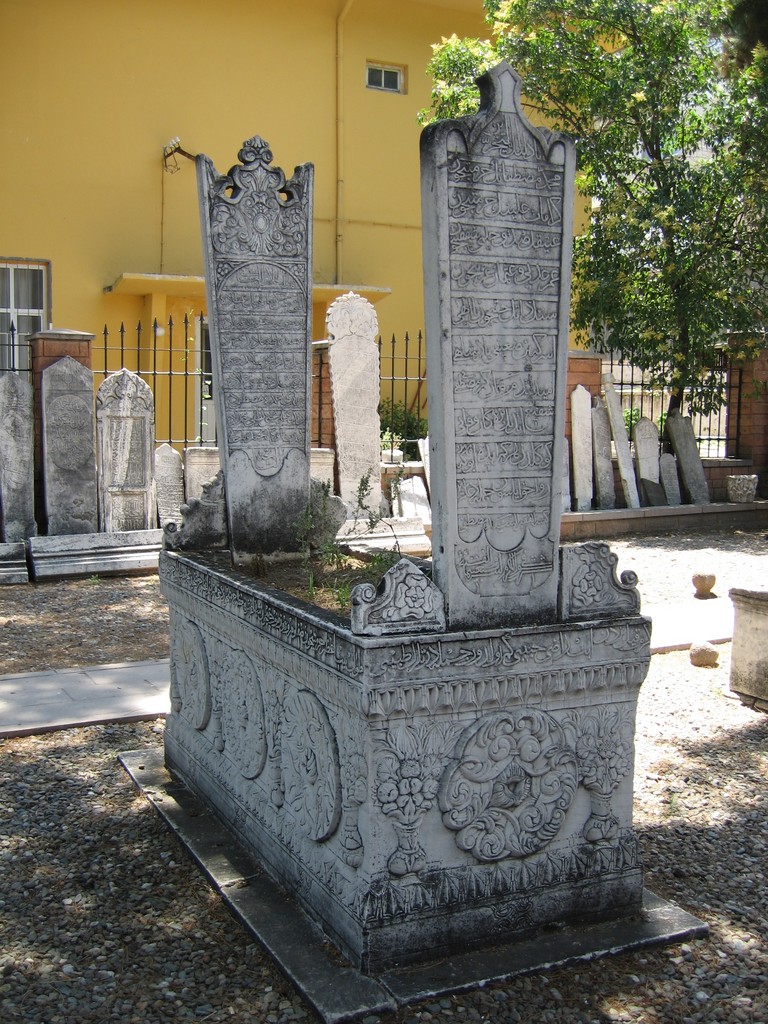
An Ottoman era sarcophagus on display in the Bergama museum. Due to the elaborate decorations, it must have belonged
to someone of significance.
|
 (High-Res)
 (High-Res)
 (High-Res)

 (High-Res)
 (High-Res)
 (High-Res)
 (High-Res)

 (High-Res)
 (High-Res)
 (High-Res)